


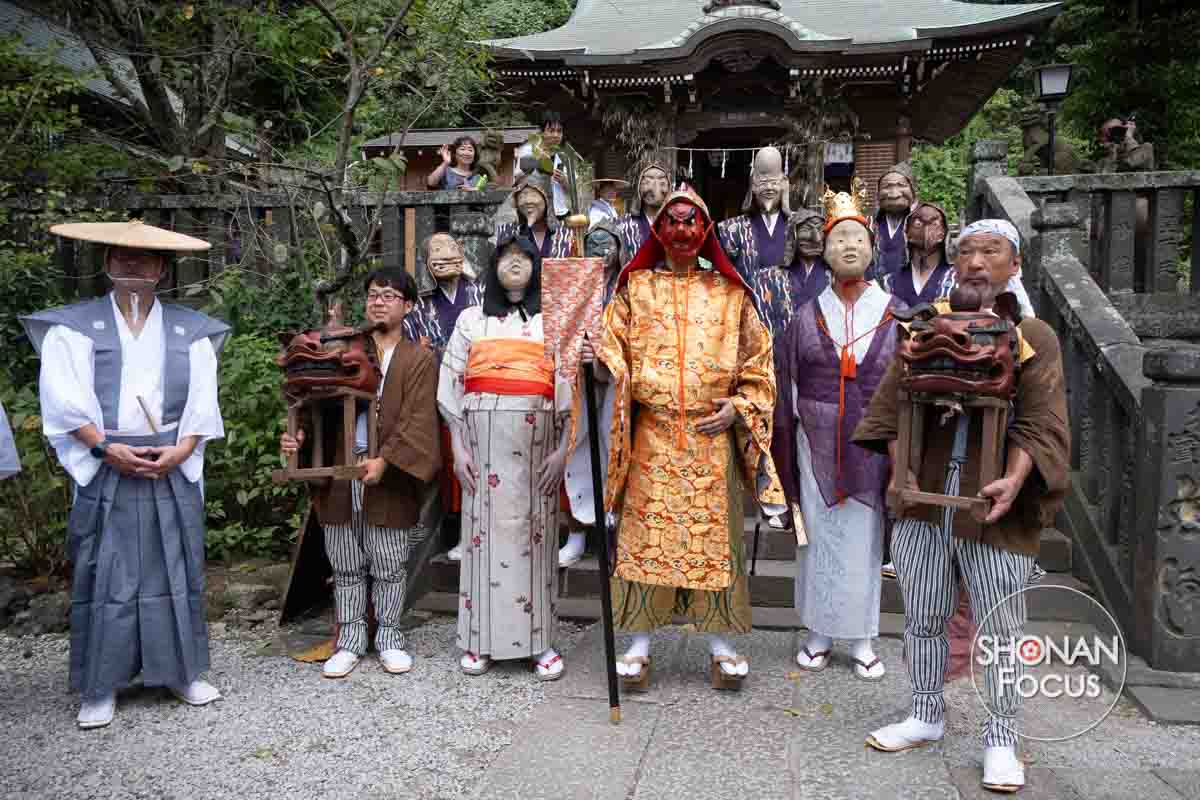
Every year on September 18, Goryō-jinja Shrine in Kamakura honors Kamakura Gongorō Kagemasa, an 11th century samurai who became a protective deity. The day begins with sacred rituals, including the Yutate Kagura: bamboo branches are dipped into a cauldron of boiling water and shaken, sprinkling the crowd. This act symbolizes purification and prayers for abundant harvests.
In the afternoon, the Sakanoshita district comes alive with the Menkake Gyoretsu, the “Masked Procession,” recognized as an Intangible Cultural Property of Kanagawa Prefecture. Ten masked figures such as an old man, a demon, a tengu, a sage, and Okame, a pregnant woman with a prominent belly, parade to the sound of drums and flutes. Following Okame, a “midwife” performs exaggerated gestures, and touching Okame’s belly is believed to bring protection to expectant mothers.
Colorful costumes, theatrical movements, and the slow progress of the procession create a spectacle that is both sacred and festive. Its origins date back to the era of Minamoto no Yoritomo, when his guards wore masks to stand out during his outings. Some masks preserved today date from the 18th century, making them a valuable heritage of vanished arts such as gigaku. Blending humor, spirituality and folklore, the festival attracts many visitors each year who wish to experience the spirit of ancient Japan.